


April in Fujian: Wandering Through Tulou Villages and a Slower Side of China

April is one of those months that quietly surprises you.
I didn’t come to Fujian with a packed checklist or big expectations. I only knew I wanted to escape the noise of big cities and see something older, calmer, and more rooted in everyday life. That’s how I ended up in the mountains of southern Fujian, wandering among the famous Fujian Tulou.
Arriving in the Tulou Countryside
The first thing I noticed wasn’t the architecture — it was the color.
April turns the hills around the Tulou villages into layers of green. Rice fields glow softly under cloudy skies, tea bushes stretch along the slopes, and mist floats lazily between mountains in the early morning. The air felt warm but gentle, the kind of weather that makes walking feel effortless rather than exhausting.
When the Tulou finally appeared, they didn’t feel like tourist attractions. They felt like villages that just happened to be extraordinary.
Massive round and square earthen buildings stood quietly among farmland, their thick walls worn smooth by time. Some doors were open, laundry hung from upper floors, and elderly locals sat near entrances chatting or watching visitors pass by.
This wasn’t a museum. People still live here.
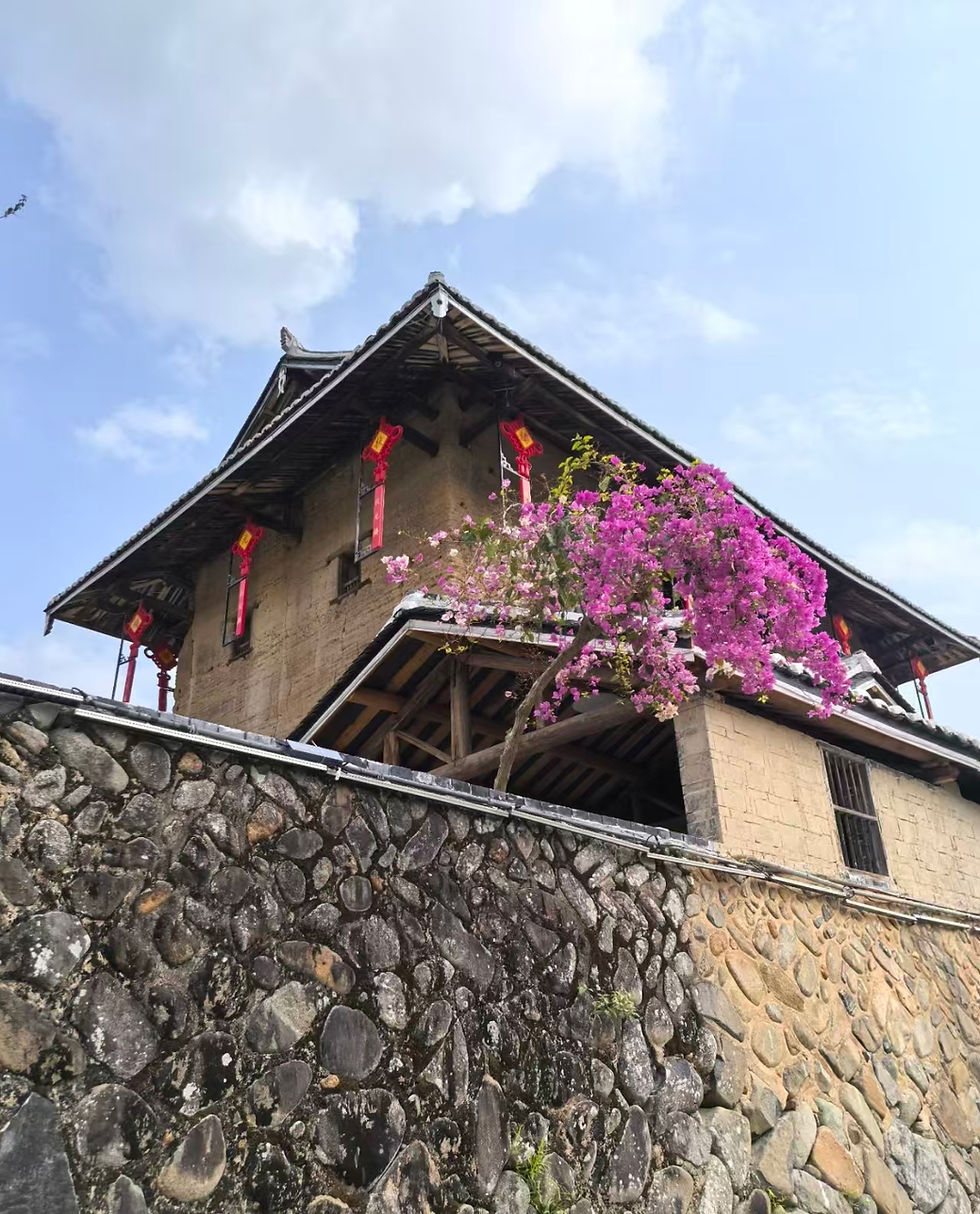
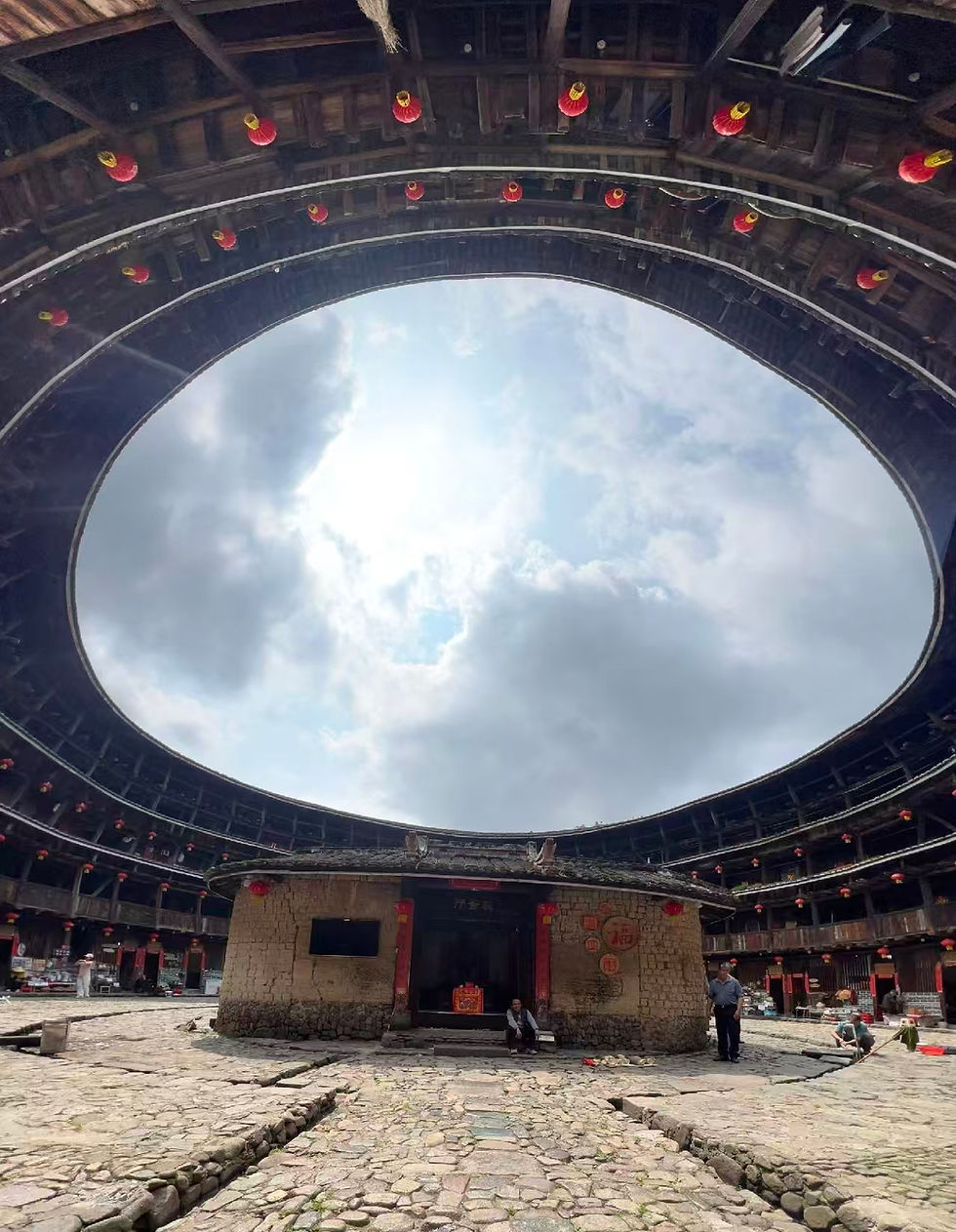
Inside a Living Piece of History
Stepping into a Tulou courtyard felt like entering a self-contained world. Families share kitchens, corridors circle upward like a maze, and sunlight pours into the open center.
What struck me most was how practical everything felt. These buildings weren’t designed to impress outsiders — they were built for protection, community, and survival. And yet, centuries later, they are still standing.
In April, life here feels unhurried. Locals tend to small fields, children play in courtyards, and visitors move slowly, taking photos, asking questions, or simply sitting down for a break.
If you stay overnight nearby (which I highly recommend), the experience changes completely. Once the day-trippers leave, the villages grow quiet. Evenings are filled with soft conversations, insects humming, and the occasional sound of cooking drifting through the walls.
More Than Just Tulou
What I loved about this trip was that the Tulou were only part of the story.
Spring is tea season in Fujian, and the mountains feel alive. I passed small tea gardens where fresh leaves were just beginning to grow, and villagers explained how different harvest times affect flavor. Even without deep tea knowledge, it was easy to feel connected to the land.
On another day, I visited Yunshuiyao, a nearby ancient village with stone paths, old bridges, and towering banyan trees. It felt softer and more poetic — a perfect contrast to the powerful presence of the Tulou.
Many travelers combine the Tulou with Xiamen, and it makes sense. After days in the countryside, returning to the coast — walking around Gulangyu Island or sitting by the sea — felt like easing back into modern life.

Why April Works So Well
I couldn’t imagine a better time to be here.
The weather is comfortable — warm during the day, cool in the evenings
The landscape feels alive, but not overwhelming
Crowds are manageable, and the pace feels human
There were moments when I simply sat on a stone step, watching clouds drift over earthen walls, thinking how rare it is to find places that haven’t been polished into performance.
Fujian Tulou isn’t a place that shouts for attention. It waits quietly.
April gives it space to breathe — and gives travelers the chance to slow down, listen, and experience a side of China that still moves at its own rhythm.
If you’re looking for something real, something grounded, this might be the journey you didn’t know you needed.


Comments