


Nuodeng: The Hidden Salt Capital of the Ancient Tea Horse Road

Nestled in the deep valleys of Northwest Yunnan, Nuodeng Ancient Village feels less like a tourist destination and more like a living breathing time capsule. As one of the oldest Bai ethnic settlements in the region, Nuodeng has remained largely untouched by the rapid modernization seen in its neighbors, Dali and Lijiang. For those chasing the echoes of the Ancient Tea Horse Road, this village is a spiritual homecoming.

Tai Ji☯️
The Legacy of the "White Gold"
For over a thousand years, Nuodeng’s heart beat to the rhythm of its salt wells. Known as "white gold," the salt produced here was a vital currency on the trade routes connecting China with Tibet and Southeast Asia.

Walking through the village, you can still feel the weight of this history. The cobblestone paths are worn smooth by centuries of mule caravans carrying salt out and tea in. Even today, the village is world-famous for its Nuodeng Ham, a delicacy cured with local well salt and aged in the dry mountain air for years—a must-try for any culinary traveler.
Architecture: The "Heavenly Steps"
Nuodeng’s architecture is a vertical marvel. Because the village is built on an incredibly steep slope, the homes are arranged in a "staircase" fashion.
The Vertical Order: Each courtyard looks over the roof of the one below it, creating a dense, cascading landscape of yellow earth walls and dark tiles.

The Zenith: Yuhuang Pavilion & The Ancient Observatory
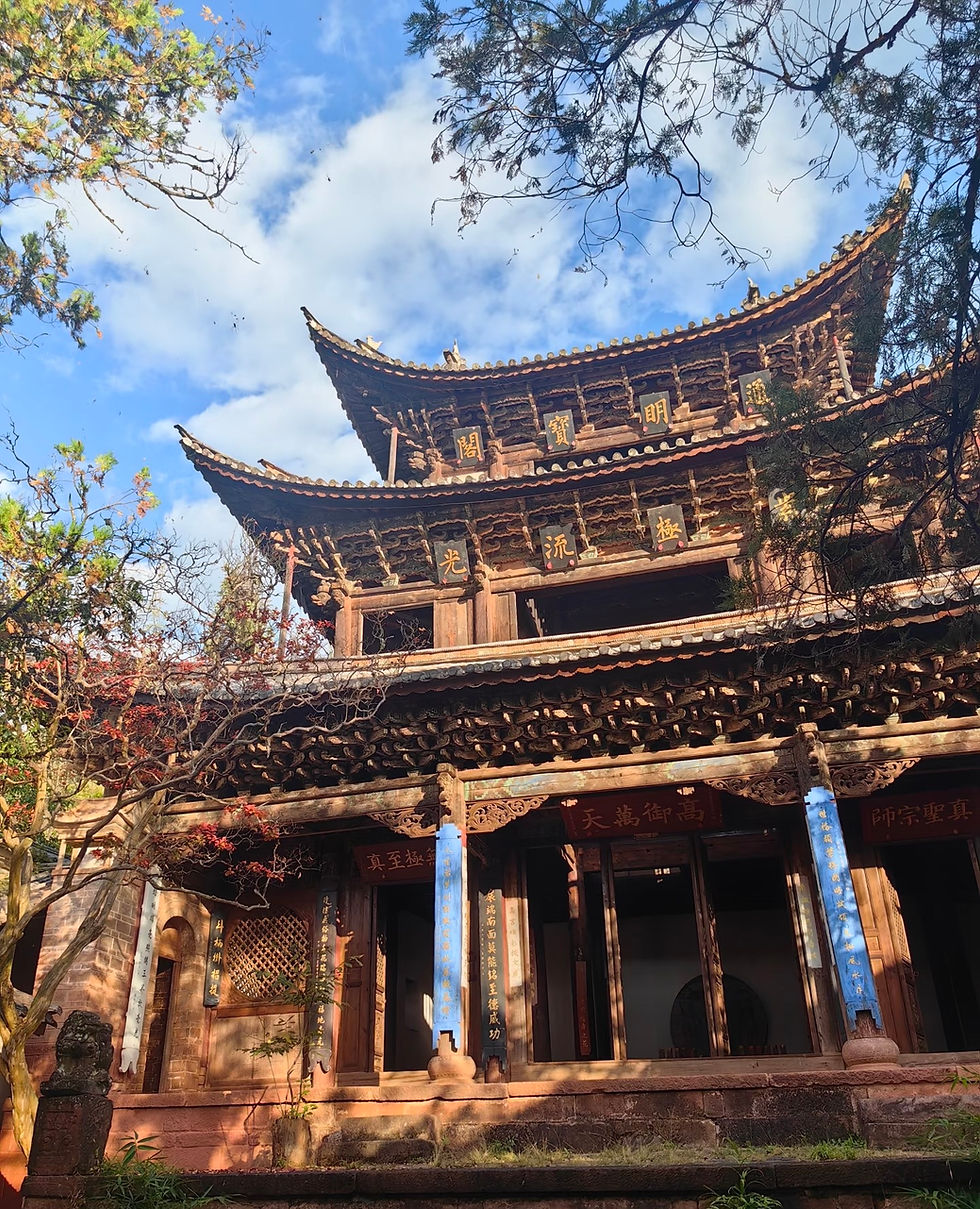
To truly understand Nuodeng, you must climb to its highest point. The Yuhuang Pavilion complex serves as the village’s spiritual and intellectual crown.
Passing through the majestic Tengjiao and Qifeng archways, you reach the Hall of Wuji Xuanshu. In ancient times, this wasn't just a temple; it was a celestial observatory. Here, scholars would track the North Star and constellations to determine the agricultural seasons. Standing at this summit, where the architecture seems to touch the stars, you realize that Nuodeng was not just a place of trade, but a place of profound wisdom.



Comments