


Nuogan Ancient Village: A Hidden Sanctuary in the Clouds of Jingmai Mountain

If you travel deep into the mist-covered peaks of southwestern Yunnan, you will find a place where the modern world feels like a distant memory. Nuogan Ancient Village, located on the UNESCO-listed Jingmai Mountain, is a breathtaking testament to the harmony between humans and nature. In the local Dai language, Nuogan means "a place where deer come to drink"—and even today, it remains a tranquil oasis for those seeking the "old Yunnan."

The Architecture of Harmony: Stilt Houses and Black Tiles
As you descend into the village, you are greeted by an extraordinary sight: a sea of cascading, dark-tiled roofs nestled within a verdant valley.

The Dai Tradition: Nuogan is one of the best-preserved examples of traditional Dai stilt architecture (Ganlan). These wooden structures are elevated to keep residents dry and cool, with the lower levels often used for tea processing or storage.

The Black Roofs: The weathered, hand-laid tiles give the village a somber yet dignified aesthetic. Look closer at the rooflines, and you’ll spot ox-horn motifs, a sacred symbol reflecting the villagers’ deep spiritual connection to their livestock and the natural world.

Living with the "Tea Ancestor"
Nuogan isn't just a village; it’s the guardian of the world’s oldest cultivated tea forests. The residents here are members of the Dai ethnic group, who have lived as stewards of the Jingmai tea trees for over a thousand years.
Tea Culture: Every household in Nuogan is intertwined with tea. You can hear the rhythmic sound of tea leaves being dried and smell the earthy fragrance of Pu'er wafting through the narrow lanes.

A Sacred Bond: The villagers believe in the "Tea Ancestor," treating the ancient trees with the reverence usually reserved for royalty. To sit in a wooden tea room here and sip a cup of fresh brew is to taste a thousand years of history.
The Atmosphere: Time Moves Differently
The true magic of Nuogan lies in its quietude. Unlike the crowded tourist hubs of Dali or Lijiang, Nuogan moves to the beat of nature.
Morning Mist: Wake up early to see the village shrouded in mountain clouds, with smoke rising lazily from kitchen chimneys.
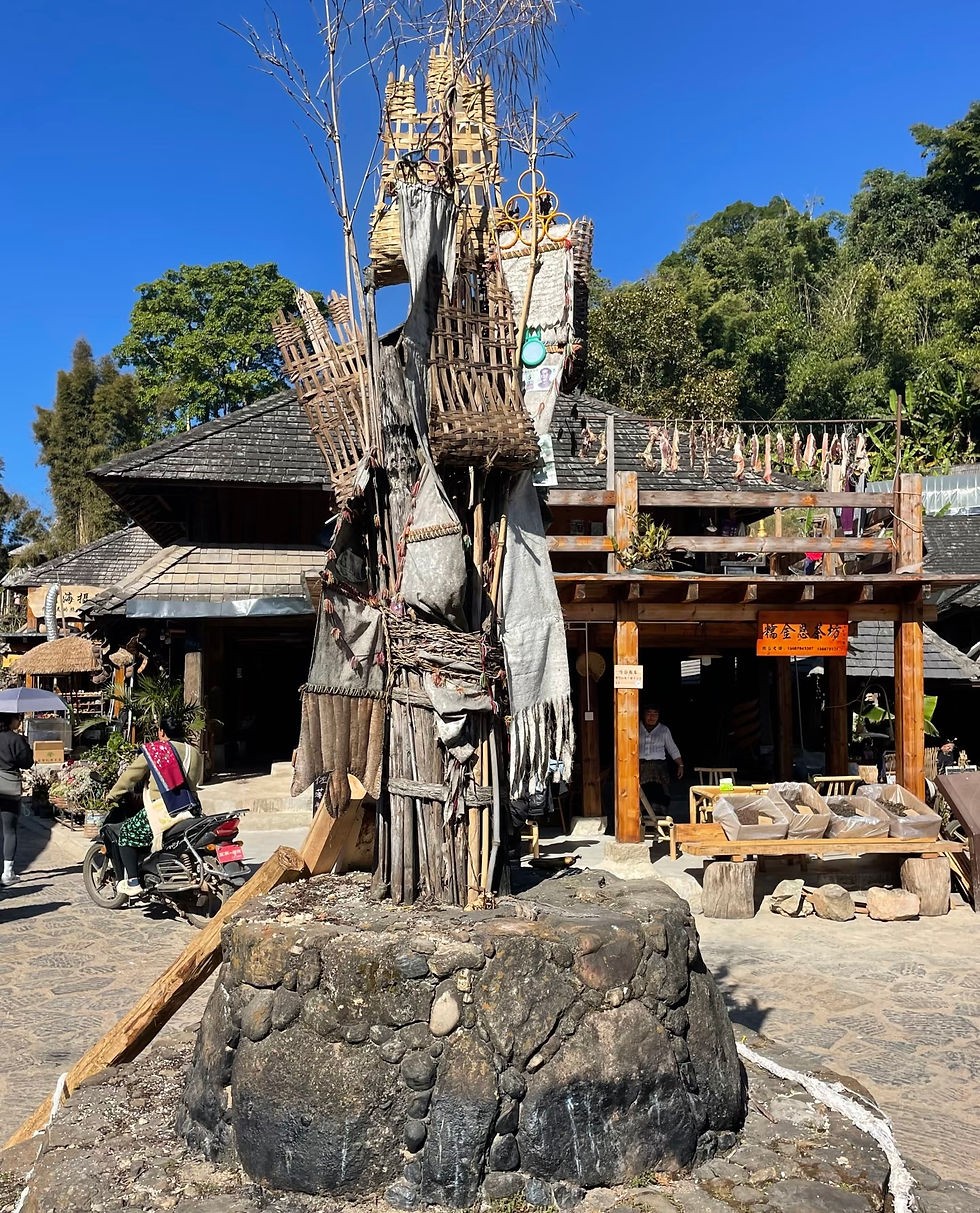
Slow Living: You won't find neon signs or loud music. Instead, you’ll find elders weaving traditional fabrics on their porches and children playing in the stone-paved alleys. It is a place for slow travel—where the goal isn't to see everything, but to feel everything.
Traveler’s Essentials
Best Time to Visit: Spring (March-May) for the tea harvest or Autumn for the clearest mountain views.


Comments